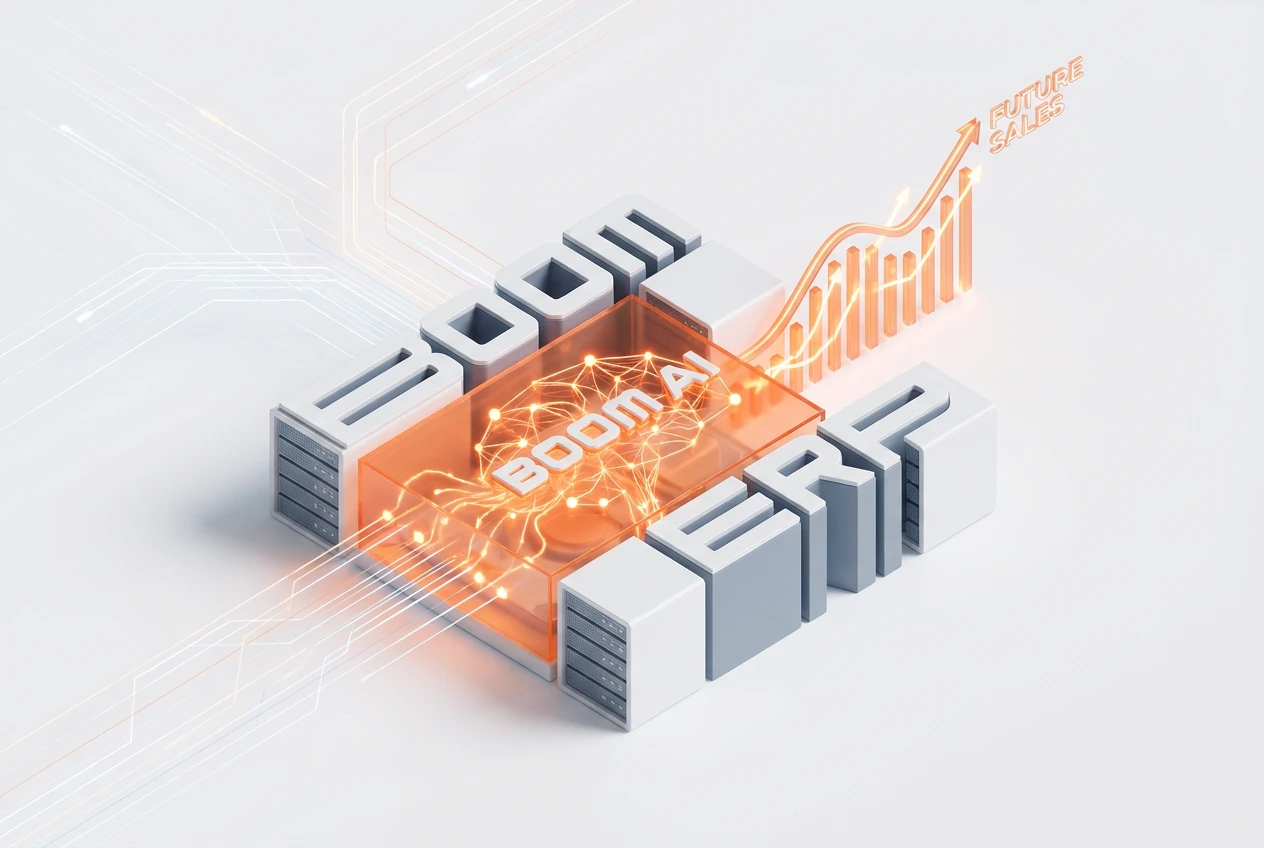
An AI-powered ERP like Boom AI provides powerful AI sales forecasting by analyzing historical sales data, market trends, and customer behavior. Consequently, it generates highly accurate sales forecasts. This predictive capability helps businesses optimize inventory and allocate resources effectively. Furthermore, it enables proactive decisions to drive revenue growth, moving far beyond simple historical reporting and outdated spreadsheets.
What Is AI Sales Forecasting in an ERP?
AI sales forecasting is a method that uses artificial intelligence within your Enterprise Resource Planning (ERP) system. Specifically, it predicts future sales volumes with remarkable precision. Instead of just looking at past performance, it uses complex algorithms to identify hidden patterns. Therefore, your business can anticipate customer demand before it happens. This data-driven approach transforms your sales strategy from reactive to proactive, giving you a significant competitive edge.
Why Is Traditional Forecasting No Longer Enough?
Traditional forecasting methods often rely on historical data alone. However, this approach can be unreliable in today’s volatile markets. It fails to account for new competitors, sudden market shifts, or changing consumer behaviors. Consequently, businesses often face stockouts or excess inventory, both of which hurt profitability. AI-powered systems, in contrast, provide dynamic and adaptive forecasts that reflect current realities. This ensures your decisions are based on the most relevant information available.
How Does Predictive ERP Analytics Work?
Predictive ERP analytics uses machine learning algorithms to process vast amounts of data. First, the system collects information from sales, marketing, and customer service departments. It then analyzes this data alongside external factors like economic indicators or social media trends. As a result, the model generates a forecast that is much more nuanced than a human could create alone. Moreover, these models learn and improve over time, becoming increasingly accurate with each new piece of data.
What Data Does an AI ERP Use for Forecasting?
An effective AI ERP leverages a wide variety of data sources for its forecasting models. For example, it analyzes historical transaction records, customer demographics, and website interactions. Additionally, it can incorporate seasonality, promotional campaign results, and even competitor pricing. By combining these internal and external datasets, the system builds a comprehensive view of the market. This holistic analysis is crucial for generating predictions you can trust for strategic planning.
How Does AI Improve Sales Forecast Accuracy?
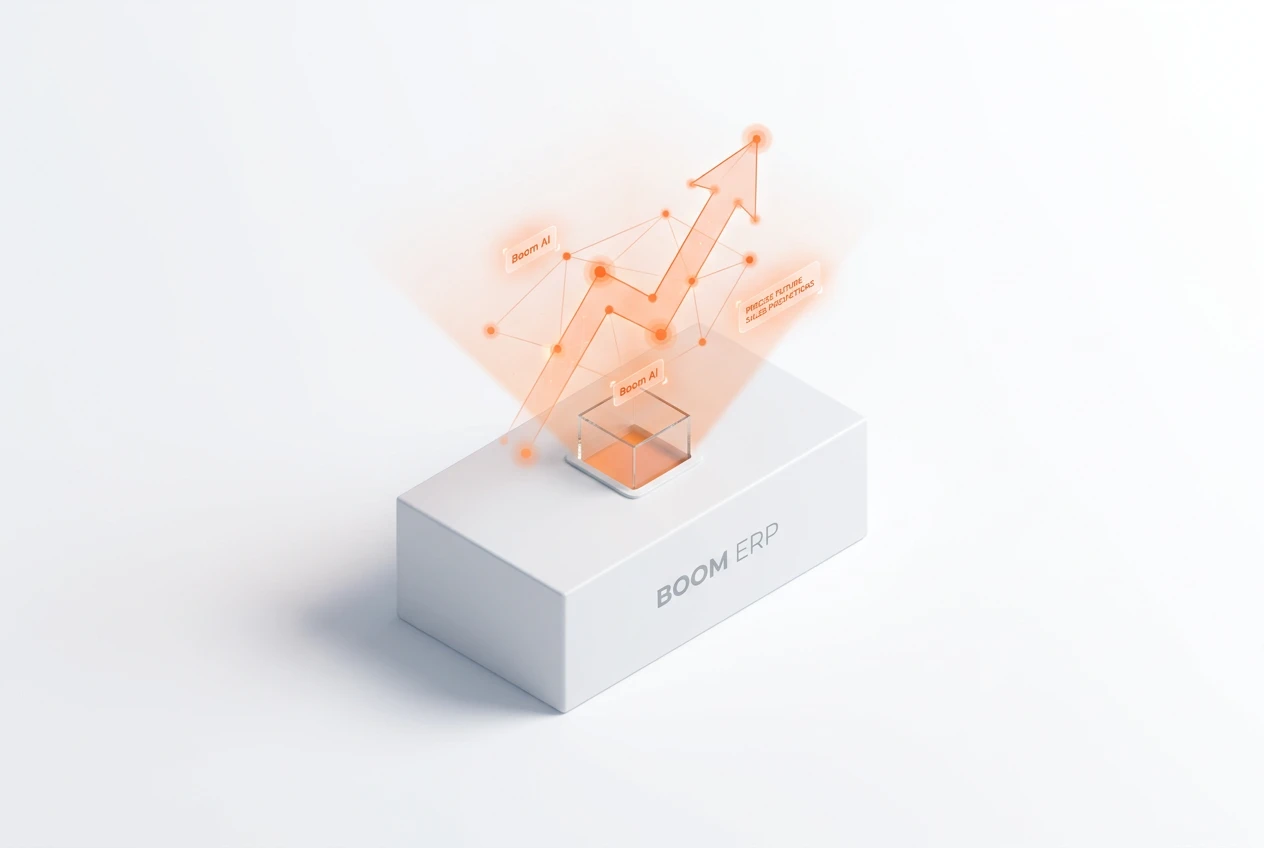
AI significantly improves sales forecast accuracy by identifying complex relationships that humans might miss. For instance, machine learning algorithms can detect how weather patterns might influence the sale of a specific product. This level of detail makes predictions much more reliable. Furthermore, AI systems can run thousands of simulations to test different scenarios, providing a range of possible outcomes. This helps sales directors and COOs understand risks and opportunities with greater clarity, which is a key function of AI business intelligence.
What Are the Key Benefits of AI Business Intelligence?
Integrating AI business intelligence into your ERP offers numerous advantages that extend beyond forecasting. These tools empower your team to make smarter, faster decisions across the entire organization. For example, you can optimize pricing strategies, personalize marketing campaigns, and improve supply chain efficiency. The core benefit is a unified, data-driven operation. Here are several key benefits:
- Increased Revenue: Accurately predict demand to capitalize on sales opportunities and avoid stockouts.
- Reduced Costs: Optimize inventory levels to minimize carrying costs and waste from overstocking.
- Improved Efficiency: Automate data analysis and reporting, freeing up your team for strategic tasks.
- Enhanced Customer Satisfaction: Ensure product availability and anticipate customer needs effectively.
- Competitive Advantage: Make proactive business decisions based on predictive insights rather than historical guesses.
How Do ERP Forecasting Models Evolve?
ERP forecasting models powered by machine learning are not static. They continuously evolve and refine their predictions. As your business gathers more data, the model learns from new sales patterns, marketing results, and customer feedback. This process, known as model retraining, ensures the forecasts remain accurate even as market conditions change. Consequently, a system like Boom AI becomes a more valuable asset over time, adapting alongside your business growth and strategy shifts.
Is It Difficult to Implement Machine Learning for Sales?
Implementing machine learning for sales used to be a complex and expensive project. However, modern solutions like Boom AI have made it much more accessible. These platforms offer a unified ecosystem that replaces multiple complicated apps. With an intuitive interface and end-to-end workflows, you can deploy advanced predictive analytics without needing a dedicated team of data scientists. The focus is on simplification and delivering actionable insights directly to your decision-makers.
Frequently Asked Questions
How quickly can I see results from AI sales forecasting?
You can often see initial improvements in forecast accuracy within the first few months. The system’s predictions become progressively more accurate as it collects more data over time. Most businesses notice significant operational benefits, like better inventory management, within one or two sales cycles.
Is my company’s data secure with Boom AI?
Absolutely. Boom AI is built with role-based security to ensure that sensitive data is only accessible to authorized personnel. We use advanced encryption and security protocols to protect your information, providing a secure environment for your entire lead-to-cash workflow.
Does Boom AI integrate with other tools?
Boom AI is designed as a unified ecosystem to minimize the need for other applications. It handles everything from lead management to final accounting. However, its flexible architecture allows for integrations when necessary, ensuring it fits seamlessly into your existing operational structure.
Can this system scale as my business grows?
Yes, our platform is designed to scale for any team size. Whether you are a small business or a large enterprise, the system can grow with you. It supports an expanding number of users, transactions, and data points without sacrificing performance, making it a long-term solution.
What makes using machine learning in ERP for forecasting different with Boom AI?
Boom AI simplifies the entire process. We offer an end-to-end platform that eliminates complexity. With our white-label capabilities and a 7-day free trial with no credit card required, we make it easy for you to experience the power of predictive analytics firsthand. You can also follow our journey on Facebook for updates.
Ultimately, embracing AI sales forecasting is no longer an option but a necessity for staying competitive. By leveraging predictive ERP analytics, you can move beyond guesswork and build a resilient, data-driven sales strategy. Ready to see how AI can transform your forecasts? Explore the advanced features of Boom AI and discover a smarter way to plan for the future and drive sustainable growth.