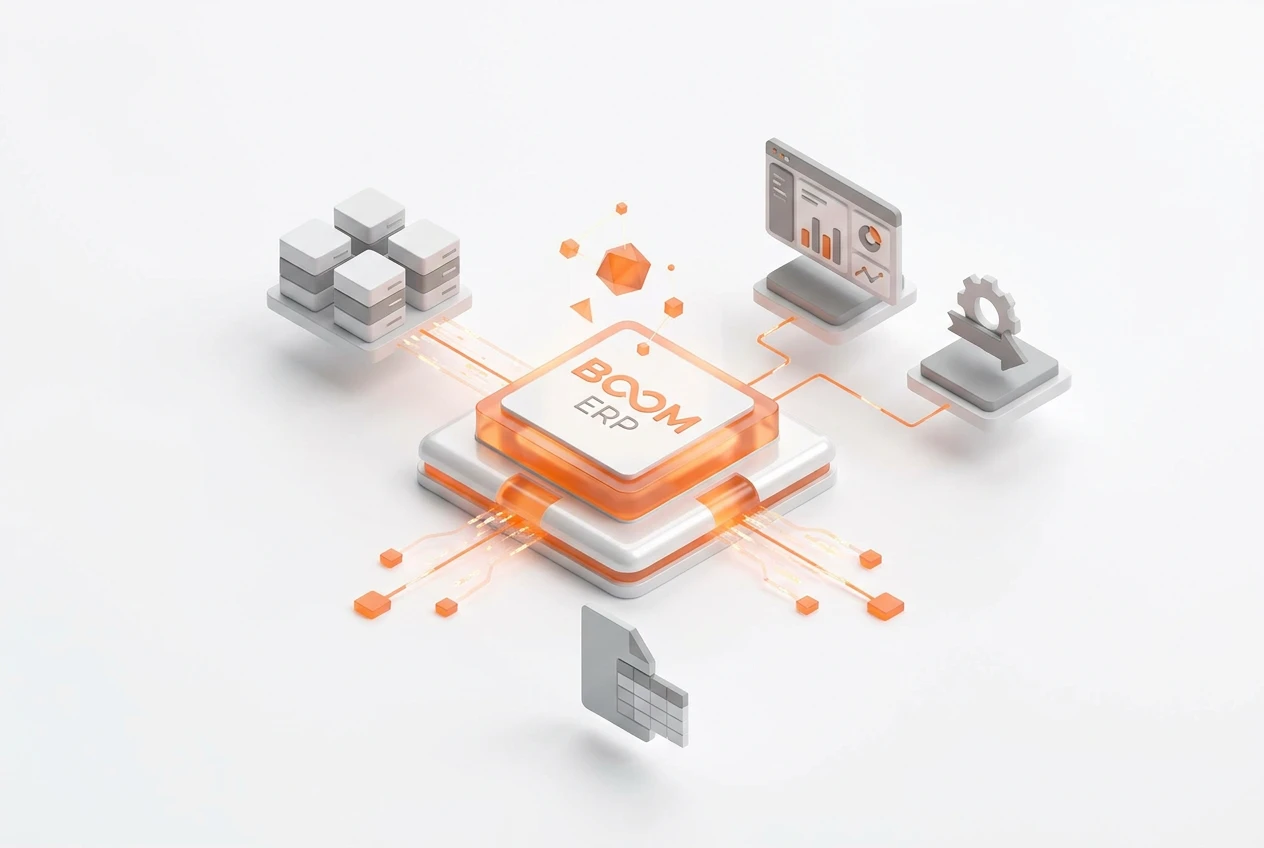
A unified ERP like BOOM ERP replaces disparate financial tools by integrating accounting, invoicing, payroll, and expense management into a single platform. This consolidation is the core of a unified financial tech stack. It eliminates manual data re-entry, reduces errors, and provides a real-time, comprehensive view of your company’s financial health. Consequently, this streamlines workflows and improves data accuracy for your entire organization.
What Defines a Disjointed Financial System?
Many growing businesses operate with a disjointed financial system. This often involves using spreadsheets for budgeting, separate accounting software for bookkeeping, and another tool for invoicing. While each tool might work well on its own, they do not communicate with each other. Therefore, employees must manually transfer data from one system to another. This process is not only time-consuming but also highly prone to human error, creating data silos and unreliable reports.
Why Are Spreadsheets Inadequate for Modern Accounting?
Spreadsheets were once a revolutionary tool for finance. However, they are no longer sufficient for the complexities of a growing business. They lack real-time collaboration, making version control a constant nightmare. Furthermore, spreadsheets are vulnerable to security breaches and accidental data deletion. When you need to replace spreadsheets for accounting, you need a system with built-in controls, audit trails, and automated workflows, which spreadsheets simply cannot provide.
What Are the Hidden Costs of Juggling Multiple Apps?
The costs of using multiple financial apps go beyond their subscription fees. First, you have the cost of inefficiency, as your team wastes valuable hours on manual data entry and reconciliation. Additionally, there are significant costs associated with training employees on several different platforms. Perhaps the most significant hidden cost comes from making poor business decisions based on outdated or incorrect data. A single error in a spreadsheet can have far-reaching financial consequences.
How Does a Unified Financial Tech Stack Provide a Solution?
A unified financial tech stack directly addresses these challenges. By centralizing all financial operations into one system, it creates a single source of truth. For example, when a sales representative closes a deal, the system can automatically generate an invoice, update inventory, and record the revenue in the general ledger. This automation eliminates redundant tasks and ensures data consistency across the entire company, leading to better financial consolidation.

What are the Core Benefits of a Unified Financial System?
Adopting a unified financial system offers numerous advantages that directly impact your bottom line. It moves your business beyond basic bookkeeping to strategic financial management. Consequently, you empower your team with the tools they need to work more efficiently and make smarter, data-driven decisions. The benefits are clear and measurable.
- Real-Time Visibility: Access up-to-the-minute financial data from a single dashboard.
- Reduced Errors: Automation minimizes the risk of human error from manual data entry.
- Improved Efficiency: Streamline workflows like invoicing, payroll, and expense reporting.
- Enhanced Security: Centralized data with role-based permissions protects sensitive information.
- Better Decision-Making: Generate comprehensive reports with accurate, timely data.
- Greater Scalability: A robust system that grows with your business, unlike spreadsheets.
Can an ERP System Truly Replace QuickBooks?
Yes, for a growing business, an ERP can be an excellent accounting software replacement. While tools like QuickBooks are great for basic accounting, they often lack the integrated functionality that a growing company needs. An ERP like BOOM ERP goes further by connecting finance with sales, CRM, and project management. Therefore, you can manage your entire lead-to-cash process in one place. This makes the decision to replace QuickBooks with an ERP system a strategic move towards operational excellence.
What Is a Single Financial Platform?
A single financial platform is an integrated solution that serves as the central hub for all of your company’s financial activities. It is more than just software; it is a new operational model. Instead of patching together different applications, you operate within a cohesive ecosystem. This approach, a key benefit of a unified financial system, ensures that every department is working with the same information. It breaks down data silos and fosters collaboration between finance, sales, and operations teams.
How BOOM ERP Builds Your Unified Financial Tech Stack
BOOM ERP is designed from the ground up to be the single financial platform your business needs. We provide an end-to-end workflow that replaces your collection of disparate apps. From lead management to final payment, every step is connected. Furthermore, our platform offers powerful features like role-based security to ensure the right people have the right access. Whether you are a small team or a large enterprise, BOOM ERP scales to meet your needs, creating a truly unified financial tech stack. Follow us on Facebook for more updates!
Frequently Asked Questions
How does an ERP replace multiple financial tools?
An ERP system integrates functions like accounting, invoicing, payroll, and reporting into a single, unified platform. This eliminates the need for separate software for each task. As a result, it reduces manual data entry, minimizes errors, and provides a complete, real-time view of your finances.
Is it difficult to switch from spreadsheets to an ERP?
While any change requires planning, modern ERPs like BOOM ERP are designed for a smooth transition. We offer a 7-day free trial with no credit card required, allowing you to explore the system. Additionally, our intuitive interface and support make the move much simpler than you might think.
How does a unified system improve financial reporting?
A unified system ensures that all data comes from a single source of truth. This means reports are generated in real-time with the most current and accurate information. You can easily create comprehensive reports that combine data from sales, finance, and operations without manual consolidation.
What is the main benefit of financial consolidation in an ERP?
The main benefit is accuracy and speed. Financial consolidation in an ERP automates the process of combining financial data from various departments or business units. This provides a quick and error-free comprehensive view of the company’s financial health, which is crucial for strategic planning and reporting.
Can a small business benefit from an ERP for finance?
Absolutely. Modern ERP systems are scalable and designed for businesses of all sizes. For a small business, implementing an ERP for finance early on can establish efficient processes that support growth. It helps you avoid the pains of outgrowing simpler tools like spreadsheets and basic accounting software.
Are you ready to leave the chaos of spreadsheets and multiple apps behind? It is time to embrace a unified financial tech stack that simplifies your operations and provides the clarity you need to grow. Discover how the integrated features of BOOM ERP can transform your financial management. Explore our powerful features or start your free 7-day trial today to experience the power of a single financial platform.