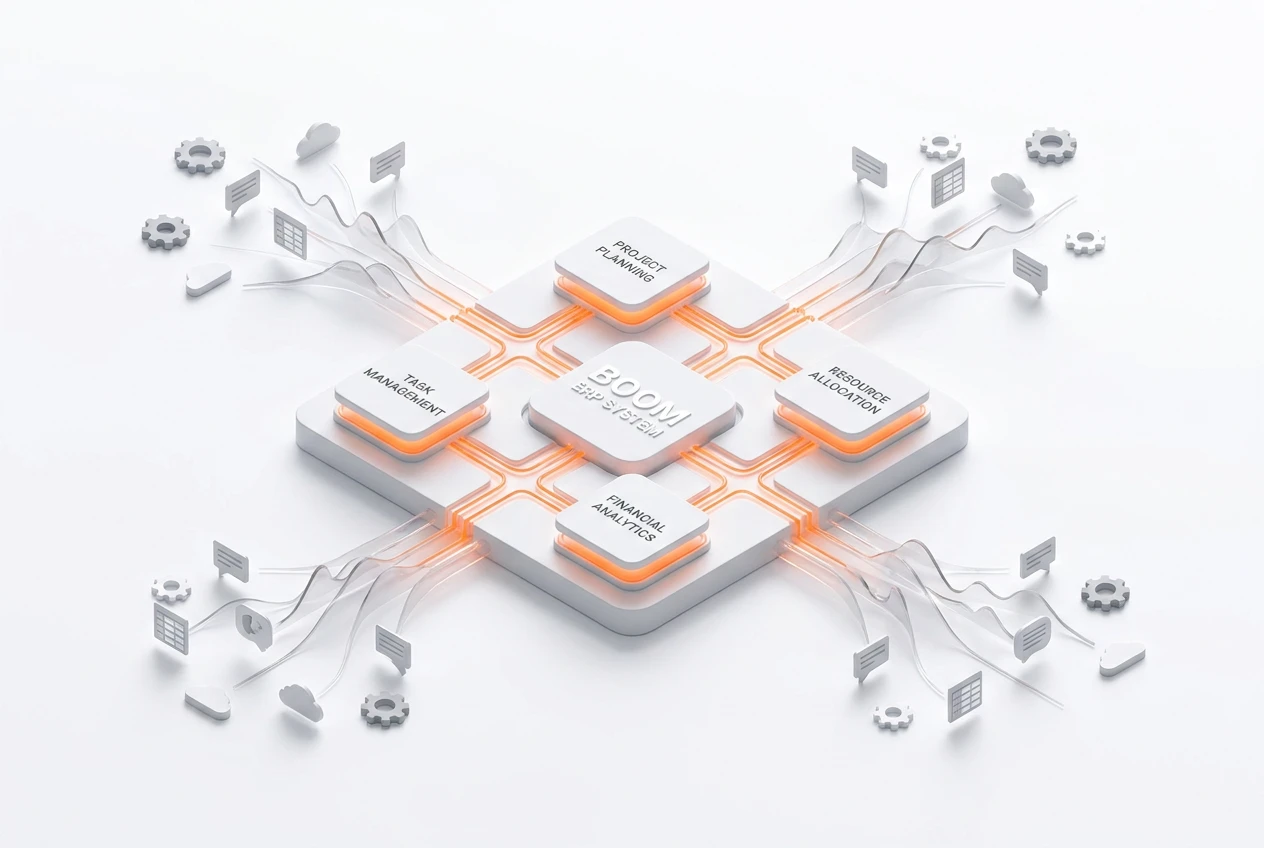
A unified project management ERP like BOOM ERP integrates project management directly with finance and CRM modules. This creates a single workflow from task assignment to final invoice. Consequently, it provides real-time data on project costs, resource allocation, and profitability. It also eliminates manual data entry between disconnected apps, ensuring accurate financial oversight and a clear project to profit workflow.
Why Do Disconnected Apps Hurt Profitability?
Many businesses juggle multiple applications for different tasks. For example, one app for project tasks, another for time tracking, and a separate one for accounting. This separation creates data silos, where important information is trapped in one system.
Consequently, your teams waste valuable time manually transferring data. This process is slow and often leads to costly errors. Furthermore, without a single source of truth, you cannot get an accurate, real-time view of project health or profitability.
What Defines a Unified Project Management ERP?
A unified project management ERP combines all critical business functions into one seamless system. It is built on a single database, which means data entered in one area is instantly available everywhere else. This approach fully connects your sales, project, and finance teams.
Specifically, it means a new project win in your CRM can automatically create a project plan and budget in the projects module. BOOM ERP, for example, provides this end-to-end visibility. Therefore, it allows you to replace multiple project management apps with one powerful solution.
How Does an Integrated System Improve Project Bidding?
Accurate bidding is crucial for profitability. A unified ERP gives you a significant advantage. Because it stores historical data from past projects, you can analyze actual costs and timelines. This historical insight allows you to create more precise and competitive bids for new work.
Moreover, you can build templates based on successful projects. This speeds up the quoting process and reduces guesswork. Ultimately, an integrated system helps you win more profitable projects by grounding your estimates in real data, not assumptions.
Can a Unified ERP Track Profitability in Real-Time?
Yes, this is a core benefit. A unified system connects every cost directly to a project. For instance, employee time sheets, material purchases, and subcontractor invoices are all linked. As these costs are recorded, the project’s budget and profitability dashboard update instantly.
This allows managers to monitor financial performance throughout the project lifecycle. If a project is going over budget, you will know immediately, not weeks later. This ability to track project profitability in real-time empowers you to make proactive decisions to protect your margins.
What is an Integrated Project Accounting Workflow?
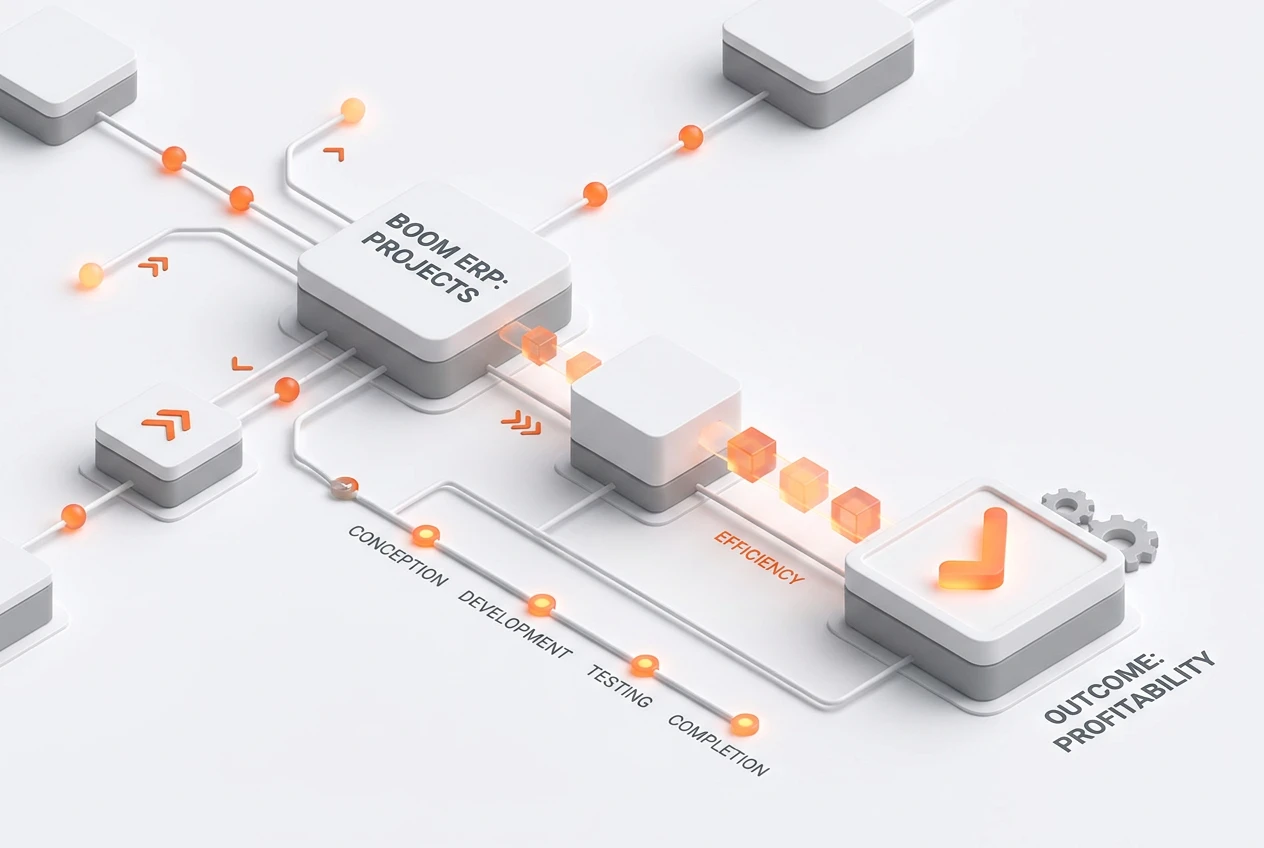
Integrated project accounting means your financial operations are directly linked to your project activities. It is the heart of a successful ERP for a project-based business. This creates a seamless project to profit workflow that starts with a client and ends with a paid invoice.
This single workflow includes several key steps:
- Initial sales quote and client approval in the CRM.
- Automatic project creation with budget and tasks.
- Real-time tracking of billable hours and expenses.
- Automated, accurate invoicing based on project progress or milestones.
- Financial reporting that shows profitability per project, client, or team.
This integration eliminates the gap between doing the work and getting paid for it.
How Does a Unified System Help Resource Management?
Effective resource management is key to delivering projects on time and on budget. A unified project management ERP provides a central view of all your team members, their skills, and their availability. You can see who is working on what project and who will be free for upcoming tasks.
Additionally, this helps prevent employee burnout by ensuring workloads are balanced. It also allows you to assign the right person with the right skills to each task, which improves quality and efficiency. With a system like BOOM ERP, you can optimize your most valuable asset: your people.
What Security and Scalability Should You Expect?
A modern ERP system must be both secure and scalable. Look for features like role-based security, which ensures employees can only access the information they need to do their jobs. This protects sensitive financial and project data from unauthorized access.
Furthermore, the system should grow with your business. A cloud-based platform like BOOM ERP can scale from a small team to a large enterprise without requiring expensive hardware upgrades. This ensures your technology investment supports your long-term growth.
How Does a Unified ERP Simplify Client Communication?
Keeping clients informed is essential for a strong relationship. A unified ERP can automate and improve this communication. For example, you can set up automated progress reports or provide clients with a portal to view project status and approve milestones.
Because all the data is in one place, these reports are always accurate and up-to-date. This transparency builds trust and reduces the number of back-and-forth emails and phone calls. It positions you as a professional and organized partner.
Frequently Asked Questions
How can an ERP unify project management and profitability?
A unified ERP like BOOM ERP integrates project management directly with finance and CRM modules. This creates a single workflow from task assignment to final invoice, providing real-time data on project costs, resource allocation, and profitability. It eliminates manual data entry between disconnected apps, ensuring accurate financial oversight.
What is the main benefit of an ERP for a project-based business?
The main benefit is gaining real-time visibility into project profitability. By connecting time, expenses, and billing in one system, you can see if a project is on track financially at any moment, allowing you to make timely adjustments to protect your margins.
Can I replace multiple project management apps with one ERP?
Absolutely. A comprehensive system like BOOM ERP is designed to be the single source of truth for your operations. It can replace separate apps for task management, time tracking, CRM, and accounting, which simplifies your tech stack and reduces subscription costs.
How does an ERP help with integrated project accounting?
It automates the flow of information from project execution to financial reporting. Billable hours and expenses logged against a project are automatically ready for invoicing, which eliminates manual calculations and ensures you bill for all work performed.
Is it difficult to switch to a unified project management ERP?
Modern cloud-based ERPs are designed for easier implementation. With a clear plan and a partner like BOOM ERP, the transition can be smooth. A 7-day free trial, with no credit card required, allows you to explore the system and its benefits before committing.
How can I learn more about BOOM ERP’s features?
You can explore all the modules and capabilities, from project management to CRM and accounting, by visiting our features page. See how our unified ecosystem can transform your business operations.
How do I track project profitability in real-time?
A unified ERP tracks profitability by linking all revenue and costs to a specific project. As your team logs hours or a purchase is made, the system automatically updates the project’s profit and loss statement, giving you an instant, accurate view.
In short, juggling disconnected apps is a recipe for inefficiency and lost profits. A unified project management ERP provides the single, integrated platform you need to connect your projects to your profitability. By streamlining workflows and providing real-time data, systems like BOOM ERP empower you to make smarter decisions, improve client satisfaction, and grow your business with confidence. Ready to see how a unified system can work for you? Explore all the BOOM ERP features today or follow us on Facebook for updates.