
An effective dead stock reduction strategy starts with data. An ERP system reduces dead stock by integrating sales trends with inventory levels in real-time. This allows for accurate demand forecasting, automated reordering, and early identification of slow sellers. Consequently, this prevents overstocking, cuts carrying costs, and improves cash flow by minimizing capital tied up in unsold goods. It is a proactive approach to inventory management.
What Exactly Is Dead Stock?
Dead stock refers to inventory that has not sold and is unlikely to sell in the future. These items often become obsolete, expire, or fall out of fashion. For example, seasonal products after the season ends or electronics replaced by newer models can become dead stock. This unsold merchandise takes up valuable warehouse space. Furthermore, it represents frozen capital that could be invested elsewhere in your business, directly impacting profitability.
Why Is a Dead Stock Reduction Strategy Crucial?
A clear dead stock reduction strategy is essential for financial health. Holding onto unsold goods incurs significant carrying costs, including storage, insurance, and potential spoilage. These expenses directly eat into your profit margins. Additionally, dead stock ties up cash that could be used for purchasing popular items or funding growth initiatives. By actively managing and reducing slow-moving inventory, you can free up capital, lower operational costs, and improve your overall cash flow.
How Does Real-Time Stock Management Prevent Waste?
Real-time stock management provides an immediate and accurate view of your entire inventory. This instant visibility allows you to see what is selling and what is not. As a result, you can make swift decisions to avoid waste. For instance, if an item’s sales velocity drops, you can quickly initiate a promotion or bundle it with a popular product. This proactive approach, powered by systems like BOOM ERP, helps prevent items from becoming dead stock in the first place, thereby optimizing your inventory value.
Can an ERP Connect Sales Data to Inventory Control?
Absolutely. A modern ERP system’s core strength is its ability to connect sales data to inventory control. When a sale is made, the inventory count is automatically updated across the entire system. This seamless integration provides a clear picture of demand patterns. Therefore, your purchasing decisions are based on actual sales data, not guesswork. This data-driven approach is fundamental to preventing overstocking and ensuring you have the right products available at the right time.
What Is a Smart Dead Stock Reduction Strategy with an ERP?
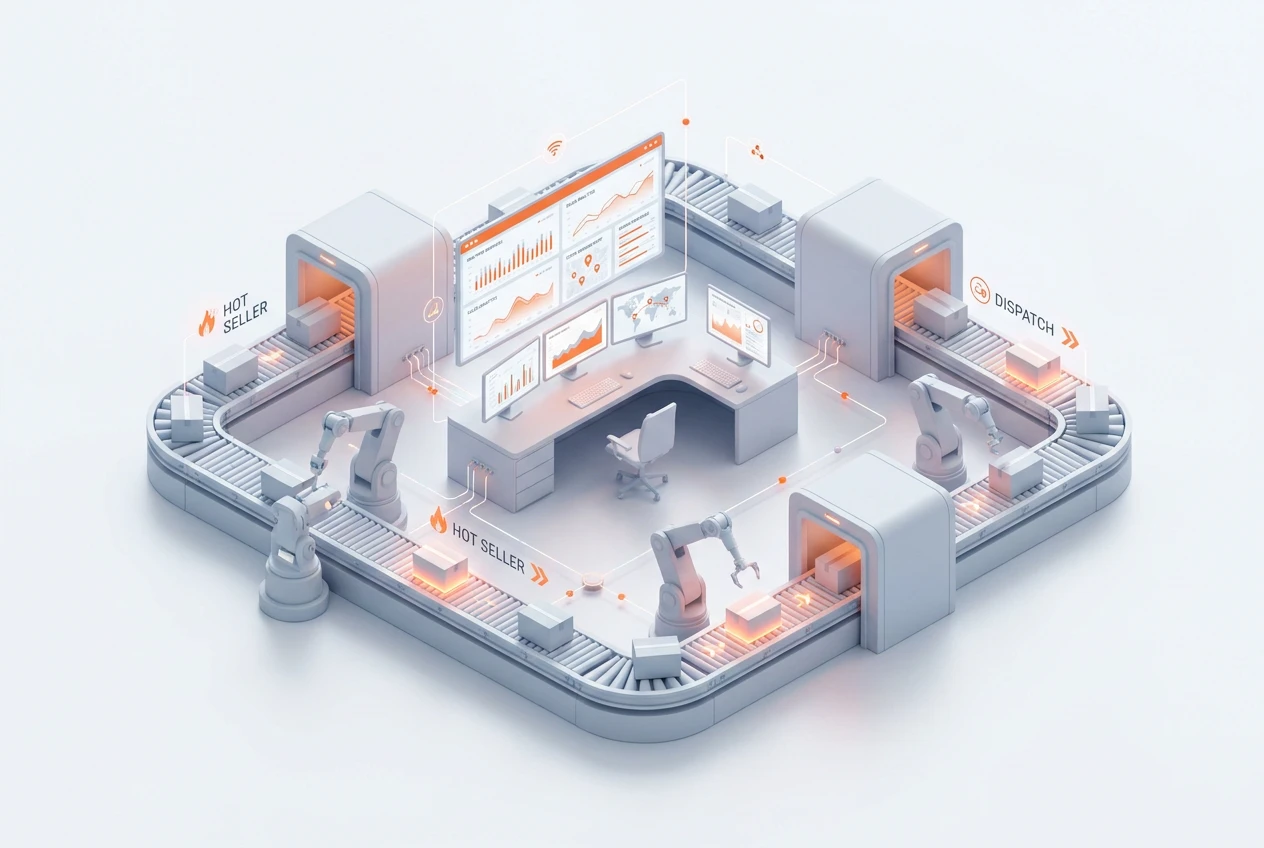
A smart dead stock reduction strategy using an ERP involves several data-driven tactics. First, you must identify slow-moving items early by setting alerts for products with low sales velocity. Next, you can use the ERP’s forecasting tools to predict future demand more accurately, preventing over-purchasing. Finally, you can analyze historical sales data to understand seasonality and trends. BOOM ERP unifies these functions into a single ecosystem, making it easier to implement a cohesive and effective strategy.
How Does Inventory Optimization Software Work?
Inventory optimization software, often a key module within an ERP, uses algorithms to analyze vast amounts of data. It considers sales history, lead times from suppliers, and current stock levels to recommend optimal reorder points and quantities. This automation helps maintain a lean inventory. Consequently, it minimizes the risk of both stockouts and overstock situations. The goal is to strike the perfect balance that maximizes sales while minimizing the capital tied up in inventory.
What Are the Steps to Prevent Overstocking?
Preventing overstocking requires a systematic approach, which is simplified with a unified ERP. A comprehensive platform like BOOM ERP helps you take control with a clear, end-to-end workflow. Here are key steps you can implement:
- Analyze Sales Data: Regularly review sales reports to identify your best and worst-selling products.
- Implement Just-in-Time (JIT): Order stock to arrive just as you need it, reducing the time it sits on shelves.
- Improve Demand Forecasting: Use ERP tools to predict future sales based on historical data and market trends.
- Set Reorder Points: Automate purchase orders when stock levels for popular items hit a predetermined minimum.
- Manage Supplier Lead Times: Factor in how long it takes for new stock to arrive to avoid ordering too early or too late.
- Liquidate Slow Movers: Create promotions, bundles, or flash sales for items identified as slow-moving before they become dead stock.
How Does an ERP Improve Cash Flow?
An ERP system directly improves cash flow by optimizing your inventory. By implementing a strong dead stock reduction strategy, you stop tying up money in products that do not sell. This frees up capital that can be reinvested into high-demand inventory, marketing, or other business areas. Moreover, by preventing overstocking, you reduce carrying costs like storage and insurance. This leads to higher profit margins and a healthier, more liquid financial position for your company. You can find more details on our features page.
How Can BOOM ERP Unify Your Operations?
BOOM ERP replaces the need for multiple, disconnected applications. It provides a single, unified ecosystem for all your business processes, from lead generation to cash collection. This means your sales, inventory, and financial data are all in one place, providing a single source of truth. This centralized control simplifies operations and eliminates the complexity of trying to sync different software. For more insights, connect with us on Facebook.
Frequently Asked Questions
How does an ERP system help businesses reduce dead stock?
An ERP system reduces dead stock by providing real-time data on sales and inventory. This enables accurate demand forecasting, automated reordering, and early identification of slow-moving products to prevent overstocking and improve cash flow.
What is the main cause of dead stock?
The primary cause of dead stock is inaccurate demand forecasting. When businesses overestimate customer demand, they purchase too much inventory, which then sits unsold and eventually becomes obsolete or expires.
Can I use ERP to create a dead stock reduction strategy?
Yes, an ERP is the ideal tool for creating a dead stock reduction strategy. It provides the necessary data on sales velocity, inventory levels, and historical trends to make informed decisions on purchasing and liquidating slow-moving items.
Is inventory optimization software part of an ERP?
In many modern systems like BOOM ERP, inventory optimization software is an integrated module. It works seamlessly with other business functions like sales and purchasing to ensure stock levels are always optimized.
How does real-time stock management help?
Real-time stock management gives you an up-to-the-minute view of your inventory. This allows you to react quickly to changing sales trends, preventing both stockouts of popular items and the accumulation of products that are not selling.
Why is it important to connect sales data to inventory control?
When you connect sales data to inventory control, your purchasing decisions become data-driven. You order what you know sells, which minimizes the risk of accumulating dead stock and maximizes your return on inventory investment.
Transforming dead stock into revenue is not about luck; it is about having the right data at the right time. A unified platform like BOOM ERP provides the real-time visibility and control needed to implement a powerful dead stock reduction strategy. Stop letting unsold inventory drain your resources. Explore our complete suite of inventory and warehouse management tools and start your free 7-day trial today to see the difference.