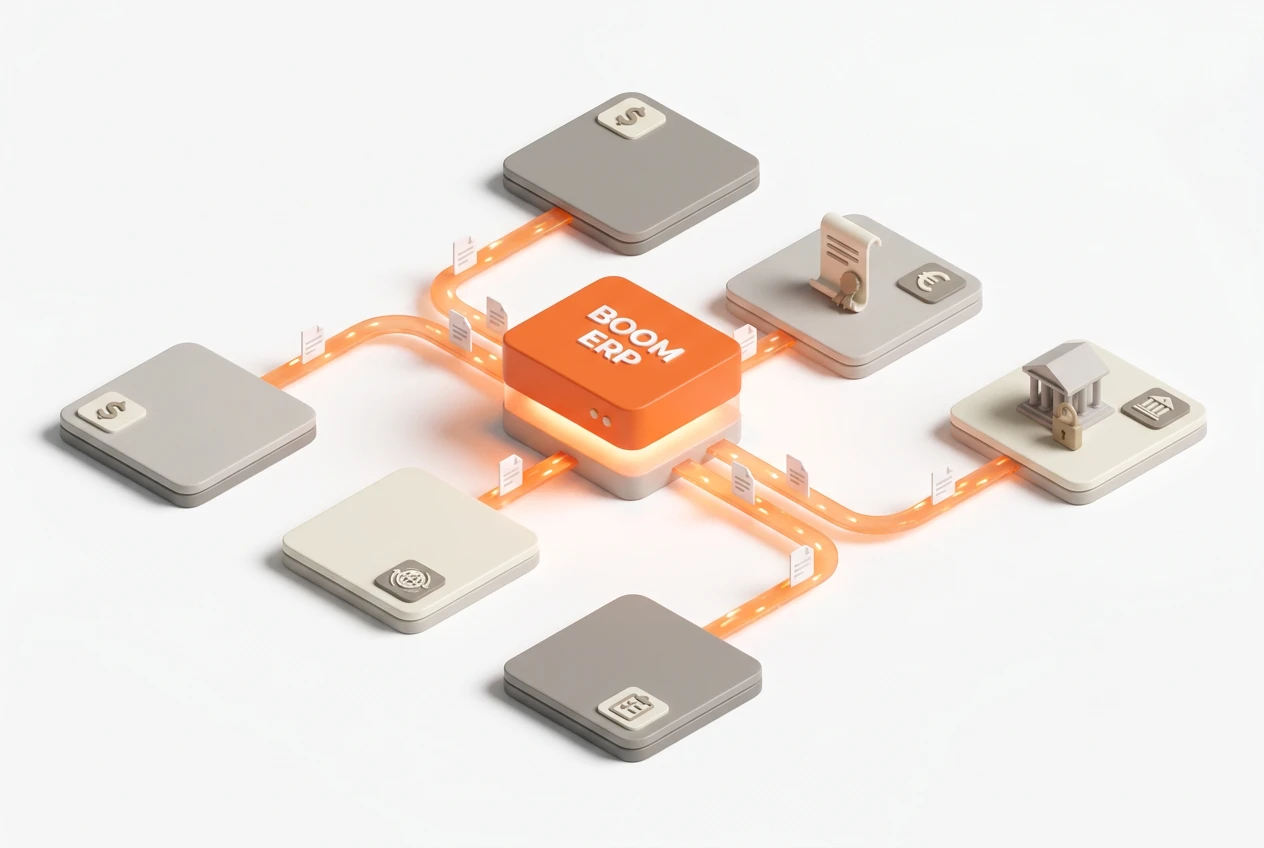
How can a business manage different e-invoice rules across countries? The best way to handle complex regional e-invoice requirements is to use a unified ERP with an adaptable e-invoicing module. For example, BOOM ERP automatically adjusts invoice formats and data to meet specific mandates, like ZATCA in Saudi Arabia. Consequently, this prevents costly errors and payment delays from a single system. It ensures smooth cross-border transactions without needing multiple billing tools.
Why Are Regional e-Invoice Requirements So Complex?
Every country has its own rules for business. Therefore, selling globally means facing a puzzle of different tax laws. Many governments now mandate electronic invoicing to fight tax evasion. However, each has a unique system. For instance, Italy uses the SdI platform, while Mexico requires CFDI digital invoices. These differences in global invoice formats and data fields make compliance a major challenge for exporters.
What Are the Risks of Ignoring Localized Billing Rules?
Failing to follow localized billing rules can be very expensive. First, you might face heavy financial penalties from tax authorities. Additionally, incorrect invoices often lead to significant payment delays from your clients. In some cases, your goods could even be held at customs, disrupting your entire supply chain. These issues ultimately harm your cash flow and business reputation. Hence, proper compliance is not optional; it is essential.
How Does an ERP Simplify Cross-Border Invoicing?
A modern ERP system acts as your central command for global sales. It simplifies cross-border invoicing by automating complex tasks. Instead of using separate tools for each market, you manage everything from one place. Specifically, BOOM ERP provides an end-to-end workflow from lead to cash. This unified approach removes the need for multiple apps, reducing errors and saving valuable time for your finance team.
Can One System Handle Various Regional e-Invoice Requirements?
Yes, a powerful, unified system can absolutely manage diverse regional e-invoice requirements. A platform like BOOM ERP is designed for this exact purpose. It uses pre-configured templates and rule sets for different countries. When you select a customer in a specific region, the system automatically applies the correct format, tax calculations, and data fields. This adaptability ensures your invoices are compliant everywhere, every time, from a single dashboard.
What Are Key Features for Multi-Country Invoicing?
When choosing a system for multi-country invoicing, look for specific capabilities. A robust solution should offer more than just basic billing. It needs to be a complete tool that supports your global growth. Notably, the right platform will provide:
- Pre-built templates for various countries and their specific invoice formats.
- Automatic validation of invoice data against local tax authority rules before submission.
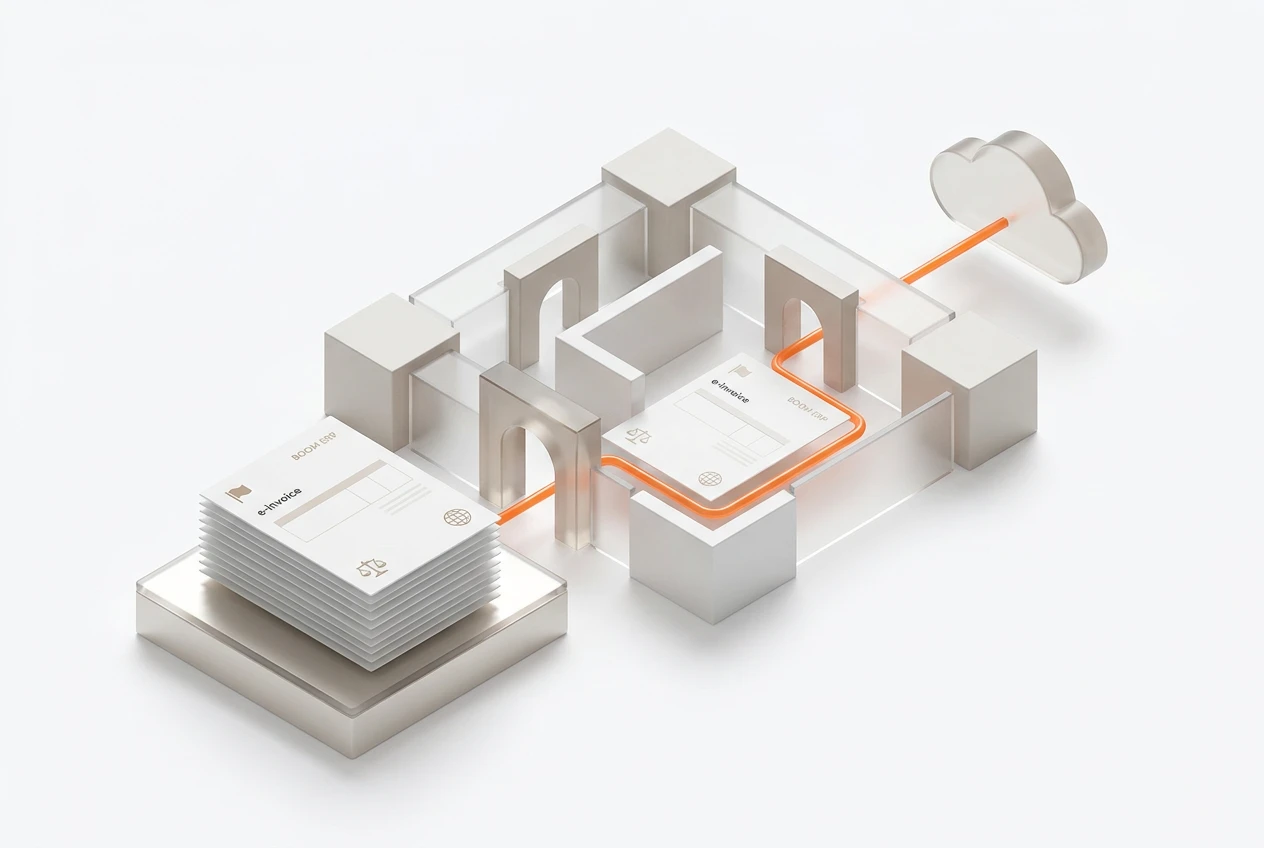
- Direct API integration with government portals for seamless, real-time e-invoice delivery.
- Real-time status tracking, so you know if an invoice was sent, received, or rejected.
- Support for multiple currencies and languages to serve a global customer base.
- Secure, cloud-based archiving to meet long-term legal storage requirements.
How Do You Manage Updates to These Billing Rules?
Tax laws and e-invoicing mandates change frequently. Trying to track these updates manually for every country is nearly impossible. However, a SaaS ERP provider handles this for you. Companies like BOOM ERP constantly monitor global regulations. They update the software in the background to reflect new rules. Consequently, your system is always current, protecting you from non-compliance due to outdated information. This continuous support is a major benefit of a subscription-based service.
What Is an Example of Localized E-Invoicing in Action?
Let’s consider Saudi Arabia’s ZATCA requirements. This system has two phases, with the second phase requiring integration with ZATCA’s platform. An invoice must include a QR code, a cryptographic stamp, and specific XML data. A unified ERP like BOOM ERP automates this entire process. It generates the compliant e-invoice, integrates with ZATCA to get it cleared, and embeds the necessary security features. This is a perfect example of how to handle international invoicing rules without manual effort.
How Can SMEs Afford Such a Powerful System?
Many small and medium-sized enterprises (SMEs) worry about the cost of advanced software. They often rely on spreadsheets or multiple cheap apps. In contrast, a unified ERP is more cost-effective in the long run. It eliminates subscription costs for multiple tools and reduces expensive errors. Furthermore, modern solutions like BOOM ERP are built to scale. You can start with a small team and expand features as your business grows, ensuring you only pay for what you need.
Frequently Asked Questions
How do I handle international invoicing rules without an ERP?
Without an ERP, you would need to manually research each country’s rules, use different software for each market, and constantly check for legal updates. This approach is time-consuming, prone to error, and increases the risk of facing cross-border e-invoice penalties.
Is an ERP system for global sales invoicing difficult to set up?
Modern cloud-based ERPs are designed for easy implementation. BOOM ERP, for example, offers a simple setup process and a 7-day free trial with no credit card required. This allows you to explore the system’s benefits before committing.
Can a single ERP handle different languages and currencies?
Yes, a key feature of any global ERP is multi-language and multi-currency support. This allows you to create invoices in your customer’s local language and currency, which improves professionalism and simplifies payments.
How does an ERP ensure data security for cross-border invoicing?
Reputable ERPs use advanced security measures. BOOM ERP includes role-based security, which means employees can only access the information relevant to their jobs. All data is also securely stored in the cloud with regular backups.
What happens if an e-invoice is rejected by a government portal?
A good ERP provides real-time status updates. If an invoice is rejected, the system will notify you immediately and often provide the reason for rejection. This allows you to quickly correct the error and resubmit it, minimizing delays.
Where can I find more information about compliant invoicing solutions?
You can learn more about unified business management systems on our features page. For social updates and insights, you can also follow us on Facebook.
In short, managing regional e-invoice requirements doesn’t have to be a burden. By adopting a unified platform, you can automate compliance, prevent errors, and focus on growing your global sales. An integrated system like BOOM ERP provides the tools you need to navigate the e-invoicing maze with confidence. Ready to simplify your global operations? Explore our features today.