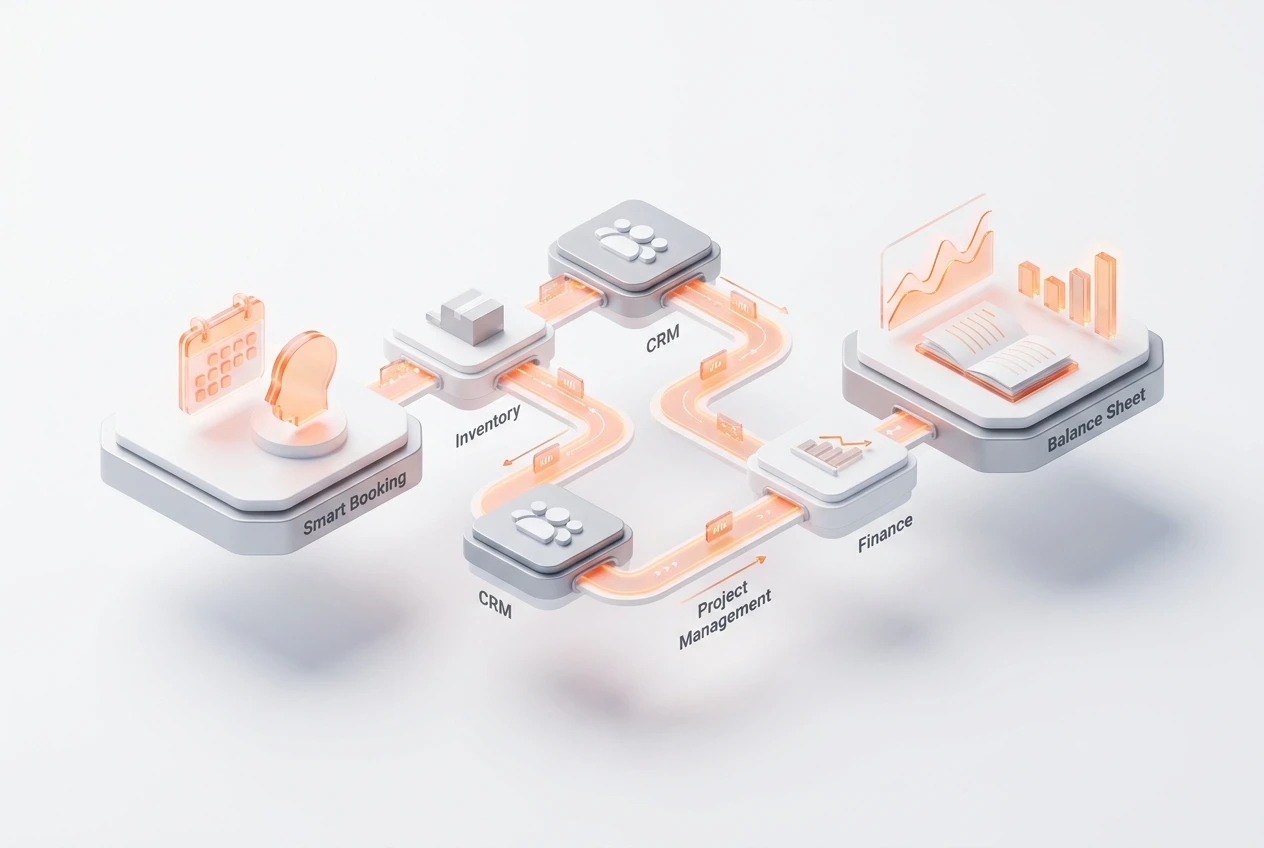
An integrated booking system connects appointments directly to your CRM and financial modules. This automates client data entry, streamlines invoicing, and eliminates manual data transfer between apps. Consequently, the result is a seamless lead-to-cash process, reduced administrative overhead, and fewer errors in client management. This ultimately leads to improved operational efficiency for your entire business.
What Is an Integrated Booking System?
An integrated booking system is a powerful tool that combines scheduling functions with other core business software. For example, it connects your calendar to your Customer Relationship Management (CRM) and accounting platforms. Instead of using three separate applications, you use one unified ecosystem. This means when a client books an appointment, their details automatically populate their CRM profile. Furthermore, this same data can be used to generate an invoice without any manual entry.
This level of integration is the core of modern efficiency. Therefore, it saves countless hours of administrative work. BOOM ERP provides this unified experience, ensuring that every booking is the starting point of a smooth, automated workflow.
How Does Automated Scheduling Boost Efficiency?
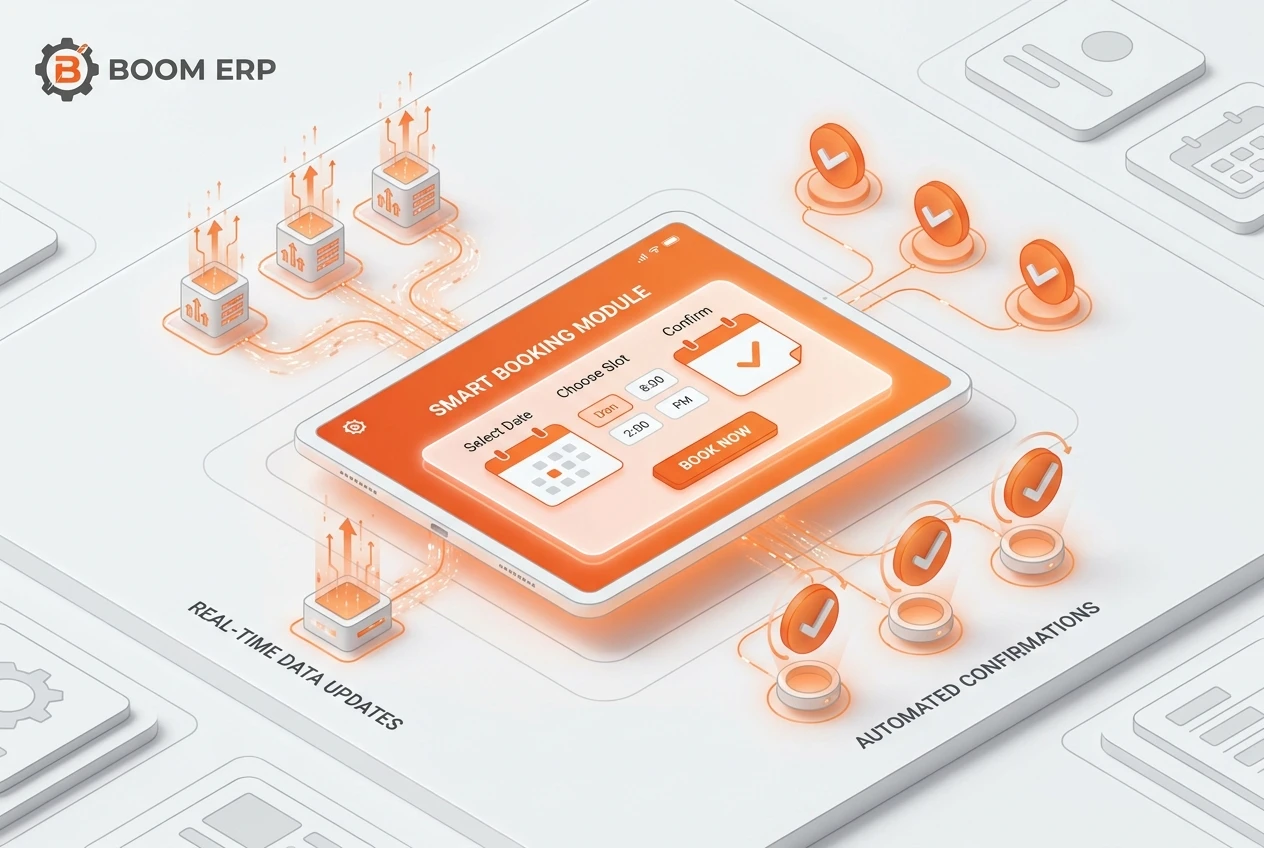
Automated scheduling removes the back-and-forth communication typically needed to set appointments. Clients can see your real-time availability and book a time that works for them directly. Consequently, your team’s calendar is updated instantly, which prevents double bookings. This automation frees up your staff to focus on more valuable, client-facing tasks instead of managing schedules.
Moreover, a smart booking platform can send automated reminders and follow-ups. This simple feature drastically reduces no-shows and keeps your schedule full. It’s a small change that delivers a significant impact on your team’s productivity and overall revenue.
Why Connect Your Booking Calendar to a CRM?
Connecting your booking calendar to a CRM creates a complete, 360-degree view of every client interaction. When a new client books, a profile is automatically created in your CRM. For existing clients, the new appointment is logged in their history. This provides your team with valuable context before every meeting. For example, they can review past notes, services, and communication instantly.
This connection transforms a simple booking into a rich data point. It helps you understand client behavior, anticipate their needs, and personalize your service. Ultimately, a CRM with booking capabilities is essential for building stronger, long-term client relationships.
Can You Unify Your Booking and Invoicing Process?
Absolutely. In fact, this is one of the most significant advantages of an integrated booking system. When you unify the booking and invoicing process, you create a direct path from service delivery to payment. Once an appointment is completed, the system can automatically generate an invoice using the client’s data and service details. This eliminates the need to manually create invoices in a separate accounting program.
This streamlined process not only saves time but also improves your cash flow. Invoices are sent out faster and with fewer errors, which means you get paid sooner. Systems like BOOM ERP are designed to manage this entire lead-to-cash workflow from a single dashboard.
What Are the Financial Benefits of a Smart Booking Platform?
A smart booking platform offers substantial financial benefits beyond simple scheduling. First, it reduces administrative costs by automating manual tasks. You spend less on labor for data entry, scheduling, and invoicing. Additionally, automated reminders decrease costly no-shows, ensuring your billable hours are maximized. The system also minimizes human error in billing, preventing revenue loss from incorrect invoices.
Furthermore, by integrating with accounting, you gain clearer financial insights. You can easily track revenue per service, client, or employee. This data helps you make smarter business decisions, identify profitable services, and optimize your operations for better financial performance.
How Does a Unified System Reduce Errors?
Manual data entry is a primary source of business errors. When staff have to copy information from a calendar to a CRM and then to an invoicing tool, mistakes are inevitable. A wrong name, an incorrect service price, or a missed appointment can lead to unhappy clients and lost revenue. A unified system, however, eliminates this risk by creating a single source of truth.
Data is entered once—at the moment of booking—and then flows automatically and accurately across all modules. Therefore, client records are consistent, invoices are correct, and schedules are always up-to-date. This reliability builds trust with clients and gives you confidence in your operational data.
What Is a Lead-to-Cash Workflow?
The lead-to-cash workflow covers the entire customer journey, from the first point of contact to the final payment. It starts when a potential client (a lead) shows interest, continues through service delivery (like a booked appointment), and ends when the invoice is paid (cash). In a fragmented system, this process is clunky and involves many manual handoffs between departments and applications.
An integrated platform like BOOM ERP streamlines this entire cycle. For instance, a lead from your website can book a consultation, which automatically creates a client profile and a sales opportunity. After the service, an invoice is generated and tracked until payment is received. This seamless flow improves efficiency and provides a superior customer experience.
How Does Client Management Software Improve Relationships?
Effective client management software provides the tools to understand and serve your clients better. By centralizing all client data—contact information, appointment history, communication logs, and billing status—you empower your team. They can access a complete client history with a single click, allowing for personalized and informed interactions. This shows clients that you know and value them.
Moreover, the software helps you stay proactive. You can track client milestones, send personalized follow-ups, and identify opportunities for new services. This level of attention transforms transactional relationships into loyal partnerships, which is crucial for long-term business growth. You can follow our updates on this topic on our Facebook page.
Is an Integrated Booking System Scalable?
Yes, a well-designed integrated booking system is built to scale with your business. Whether you are a small team of three or an enterprise with hundreds of employees, the system adapts. BOOM ERP, for example, is designed for any team size. You can add new users, services, and locations without disrupting your workflow. Role-based security ensures that team members only access the information relevant to their jobs.
This scalability is critical for growth. As your client base and service offerings expand, your operational foundation remains strong and efficient. You avoid the costly and disruptive process of migrating to new software as your business evolves. A scalable system is a future-proof investment.
Key Benefits of a Unified Platform
Switching to a unified platform offers clear, measurable advantages for any professional services firm. It is a strategic move to optimize your entire operation. The primary benefits include:
- Reduced Administrative Work: Automating data entry and scheduling frees up valuable team time.
- Fewer Costly Errors: A single source of data minimizes mistakes in billing and client records.
- Improved Cash Flow: Faster, automated invoicing leads to quicker payments from clients.
- Enhanced Client Experience: A seamless booking and communication process builds client satisfaction and loyalty.
- Better Business Insights: Centralized data provides a clear view of your operational and financial performance.
- Seamless Scalability: The system grows with your business, supporting you at every stage.
Frequently Asked Questions
How does an integrated booking system differ from standalone apps?
A standalone app only handles scheduling. In contrast, an integrated system connects that schedule to your CRM, invoicing, and accounting modules, creating a single, automated workflow and eliminating manual data transfer.
Is it difficult to switch to an integrated system?
Modern SaaS platforms like BOOM ERP are designed for easy implementation. We offer support and a user-friendly interface to ensure a smooth transition. Plus, our 7-day free trial requires no credit card, so you can explore it risk-free.
Can I customize the booking page for my brand?
Yes. Leading systems offer white-label capabilities, allowing you to customize the booking interface with your own logo, colors, and branding to provide a consistent client experience.
How does this system help with client retention?
By creating a complete client profile with all interaction history, it allows you to personalize your services and communication. This attention to detail and seamless experience builds loyalty and encourages repeat business.
What kind of security features are included?
Security is paramount. Look for systems with features like role-based access control, which ensures employees can only view the data necessary for their roles, protecting sensitive client and financial information.
How do I know if my business is ready for an integrated booking system?
If your team spends significant time manually transferring data between your calendar, client lists, and invoicing software, you are ready. If you experience errors from this manual work, it’s a clear sign you would benefit from a unified solution.
Stop juggling multiple apps and losing time to manual data entry. An integrated booking system is the key to unlocking a more efficient, profitable, and scalable operation. By unifying your workflow from the first client interaction to the final payment, you empower your team to focus on what truly matters: delivering exceptional service. Ready to see how a single platform can transform your business? Explore our full suite of powerful features today.