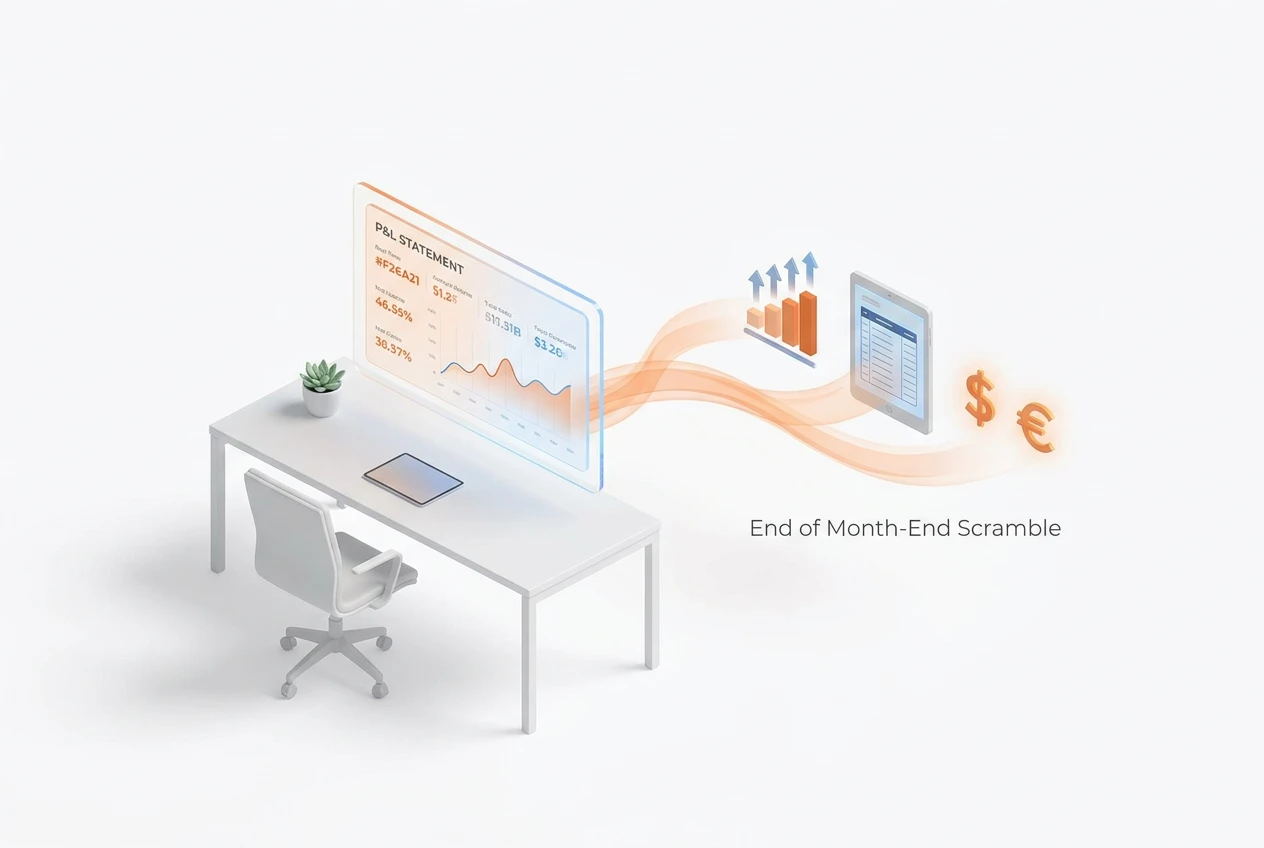
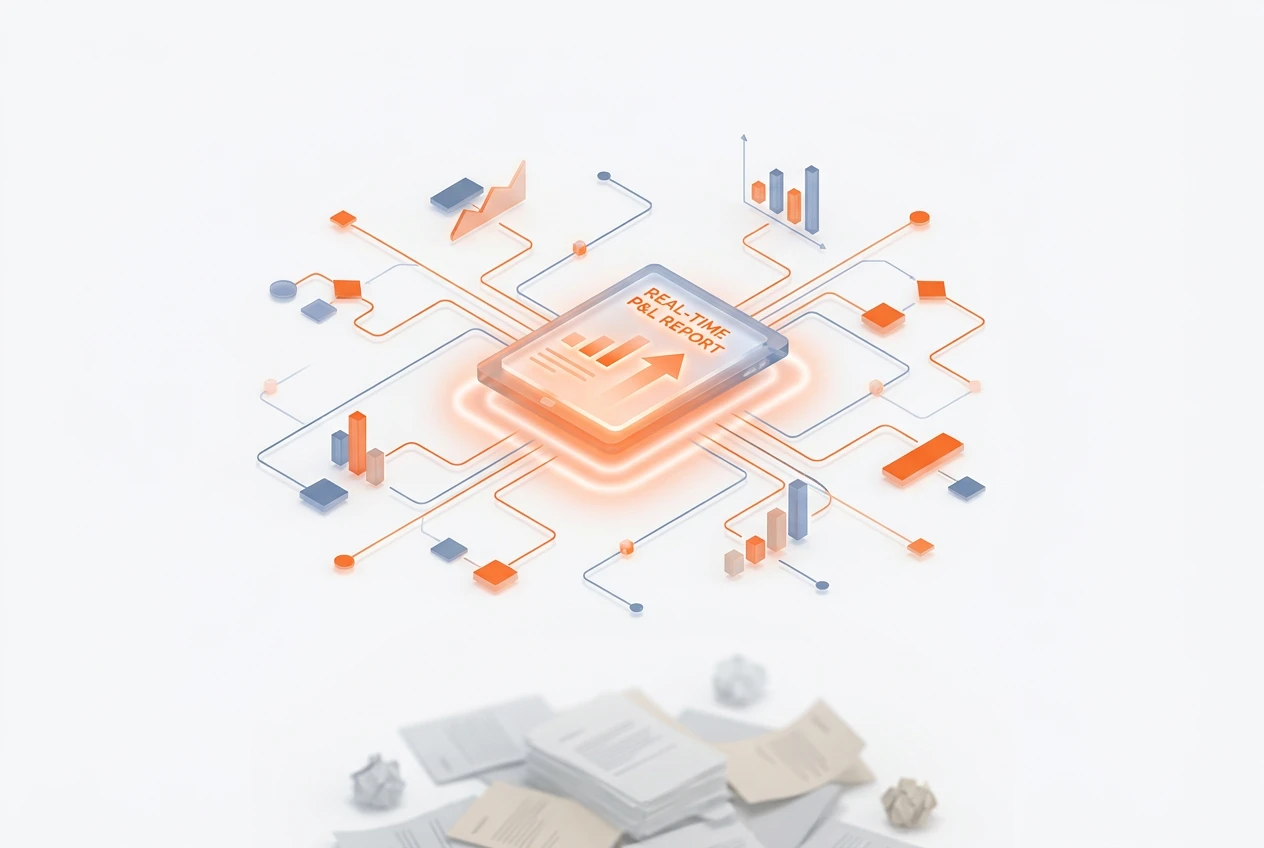
A unified ERP platform like BOOM ERP enables powerful real-time P&L reporting by automatically syncing data from sales, projects, and inventory directly into the finance module. Consequently, this process eliminates manual data entry and reconciliation delays. Transactions instantly update financial reports, providing an accurate, up-to-the-minute view of your company’s profitability at any time you need it. This transforms financial management from a reactive task to a proactive strategy.
What Causes the Traditional Month-End Scramble?
The month-end scramble is a familiar pain for many finance teams. It primarily stems from disconnected systems and manual processes. For example, data often lives in separate spreadsheets for sales, different software for project management, and another system for inventory. At the end of the month, someone must manually gather, clean, and consolidate all this information. This approach is not only slow but also highly prone to errors, leading to stressful, last-minute rushes to close the books.
How Does an ERP Provide Real-Time P&L Reporting?
An ERP system acts as a single source of truth for your entire organization. When a sales order is created, an invoice is paid, or inventory is used, the transaction is recorded once. This single entry automatically populates every relevant module, including finance. Therefore, there is no need for manual reconciliation between departments. This integrated data flow is the foundation of real-time P&L reporting, as financial statements are always current.
What Are the Key Benefits of Live Accounting Data?
Access to live accounting data provides immense strategic advantages. First, it enables faster and more informed decision-making. You can immediately see the financial impact of a new sales campaign or an unexpected expense. Additionally, it improves cash flow management by providing a clear view of receivables and payables. This visibility helps you identify trends, spot opportunities, and address potential issues before they become major problems. Ultimately, it shifts finance from historical reporting to forward-looking analysis.
How Can You Reduce Month-End Closing Time?
The single most effective way to reduce month-end closing time is by automating data consolidation. A unified platform like BOOM ERP centralizes all business data. This means financial reports, including the P&L, balance sheet, and cash flow statement, are continuously updated. Instead of spending days consolidating data, your finance team can simply review and verify the already-prepared reports. This can shorten the closing process from weeks to just a few days, or even hours.
Can Real-Time Data Improve More Than Just Reporting?
Yes, absolutely. The benefits of live accounting data extend far beyond just faster reporting. For instance, it enhances operational efficiency. Sales teams can check inventory levels in real time, and project managers can monitor budgets against actual spending instantly. Furthermore, it fosters a culture of accountability, as every department can see its financial contribution. This holistic view provided by a system like BOOM ERP helps align the entire organization around common financial goals.
What Makes an ERP’s Financial Management Different?
Traditional accounting software often focuses solely on bookkeeping. In contrast, ERP financial management integrates finance with every other part of the business. This creates an end-to-end workflow, from lead generation to cash collection. This unified approach ensures data integrity and provides a comprehensive view of business health. Moreover, a modern ERP offers advanced features like multi-currency support, automated tax calculations, and role-based security, which are essential for growing businesses. Explore these capabilities on the BOOM ERP features page.
How Does Automated Financial Reporting Work?
Automated financial statements are generated by rules and templates you set up within the ERP. When a transaction occurs, the system automatically classifies it and posts it to the correct accounts based on these rules. For example, a payment from a customer is automatically applied to their invoice and recorded as revenue. At any moment, you can run a report, and the ERP will pull the latest data from the general ledger to generate an accurate P&L or balance sheet. This automation removes the risk of manual calculation errors.
What Steps Are Involved in Getting Instant Profit and Loss Statements?
Achieving instant profit and loss statements is a straightforward process with the right system. The key steps include:
- Centralize Data: Implement a unified ERP like BOOM ERP to replace separate, disconnected applications and spreadsheets.
- Integrate Operations: Connect all your core business functions, including sales, CRM, inventory, and projects, into the single platform.
- Automate Workflows: Configure the system to automate routine tasks like invoicing, expense tracking, and bank reconciliation.
- Define Reporting: Customize your financial report templates to track the specific Key Performance Indicators (KPIs) that matter most to your business.
- Train Your Team: Ensure your team understands how to use the system to access and interpret live financial data for daily decision-making.
Is a Unified ERP System Difficult to Implement?
The idea of implementing an ERP can seem daunting, but modern SaaS platforms have simplified the process significantly. Cloud-based systems like BOOM ERP eliminate the need for complex on-premise hardware and lengthy installations. Moreover, with a user-friendly interface and a structured onboarding process, businesses can get up and running quickly. BOOM ERP is designed to scale, making it suitable for teams of any size without the massive upfront investment once associated with ERP systems. The focus is on a smooth transition to a more efficient way of working.
Frequently Asked Questions
How does an ERP system provide real-time profit and loss statements?
An ERP syncs data from all departments (sales, inventory, projects) into a central finance module. This eliminates manual data entry, so every transaction instantly updates your P&L for an always-accurate view of profitability.
What is the main benefit of live financial data?
The main benefit is empowered decision-making. With up-to-the-minute financial information, managers can react quickly to opportunities, manage cash flow effectively, and address problems before they escalate.
Can BOOM ERP handle multiple currencies and business branches?
Yes. BOOM ERP is designed for modern business complexity. It includes robust multi-currency and multi-company features, allowing you to consolidate financials from different branches or legal entities seamlessly.
How does real-time P&L reporting help with budgeting and forecasting?
Real-time data provides a highly accurate baseline for future projections. You can compare actual performance against your budget at any time, not just at the end of the month. This allows for more agile and accurate forecasting.
Is my financial data secure in a cloud-based ERP?
Absolutely. BOOM ERP uses state-of-the-art security protocols, including encryption and role-based access controls. This ensures that only authorized personnel can view or edit sensitive financial information.
How long does it take to see the benefits of automated financial statements?
You can see benefits almost immediately. Once implemented, the reduction in manual work frees up your finance team’s time right away. They can shift their focus from data entry to strategic analysis, adding more value to the business from day one.
The era of waiting for financial reports is over. With a unified system like BOOM ERP, you can finally eliminate the month-end scramble and gain the strategic advantage of real-time P&L reporting. This visibility empowers your team to make smarter, faster decisions that drive growth. Ready to transform your financial operations? Learn more about our integrated features or connect with us on Facebook to see how we simplify business management.