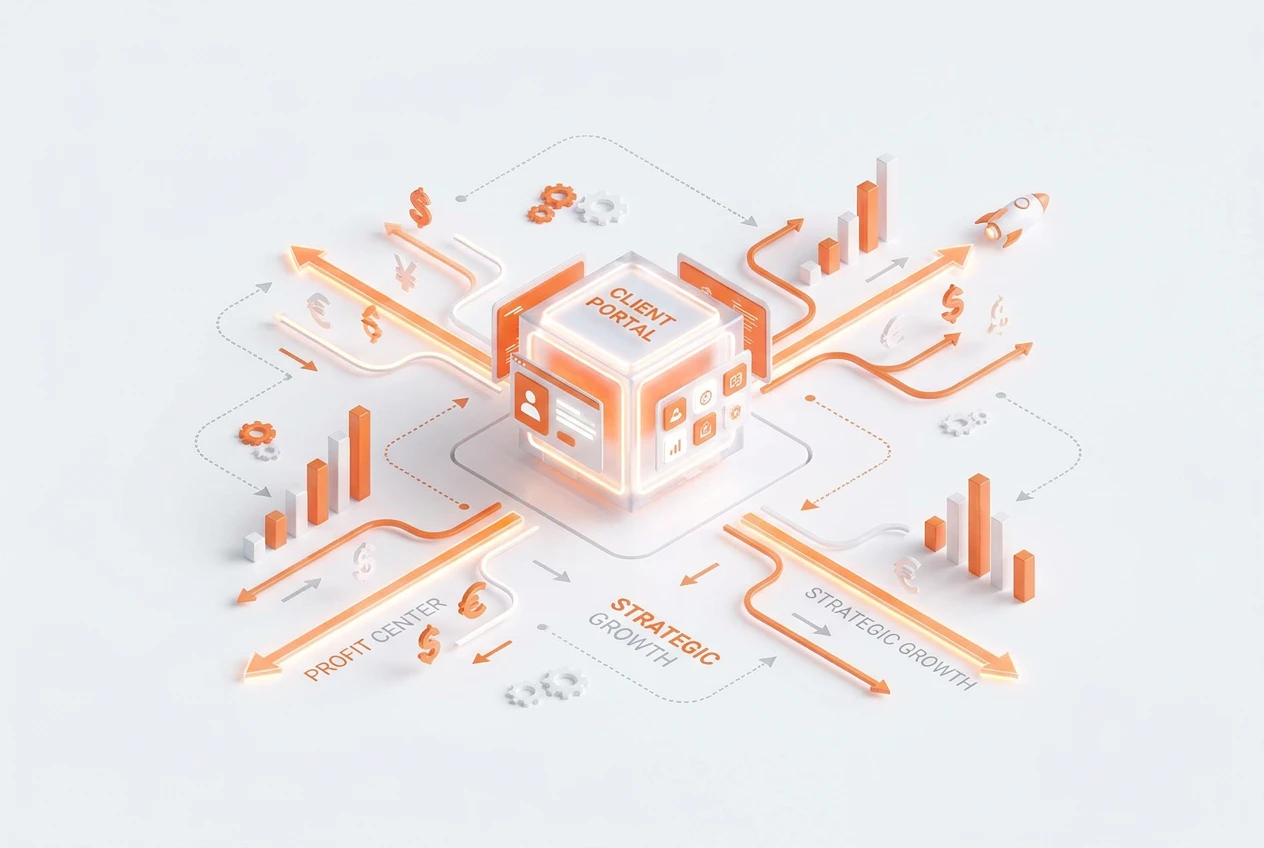
A client portal increases revenue by enabling direct upselling and cross-selling opportunities. This approach boosts your client portal ROI significantly. Furthermore, it enhances client retention through superior self-service for billing, support, and project updates. Consequently, this transforms the portal from an operational cost into a strategic asset. It boosts customer lifetime value and drives profitable growth for your business.
How Does a Portal Shift from Cost to Profit?
Traditionally, client portals were just for support tickets and file sharing. This viewed them as a necessary operational cost. However, a modern customer self-service platform integrates commerce and communication directly into the user experience. Therefore, you can actively sell and engage within the same secure space your clients already use. This strategic shift, for instance, turns a simple tool into a powerful revenue engine. A unified system like BOOM ERP is designed specifically for this transformation, moving beyond basic functions to drive profit.
What Are Direct Revenue Streams from a Portal?
You can directly monetize a client portal in several strategic ways. First, you can feature new services or product upgrades prominently on the client’s dashboard. Additionally, you can offer exclusive add-ons or premium support packages available only through the portal. This creates a sense of urgency and exclusivity. Consequently, clients feel incentivized to explore these upselling opportunities. This provides a direct and measurable path to increasing client portal revenue without extra marketing spend.
How Can Self-Service Boost Client Portal ROI?
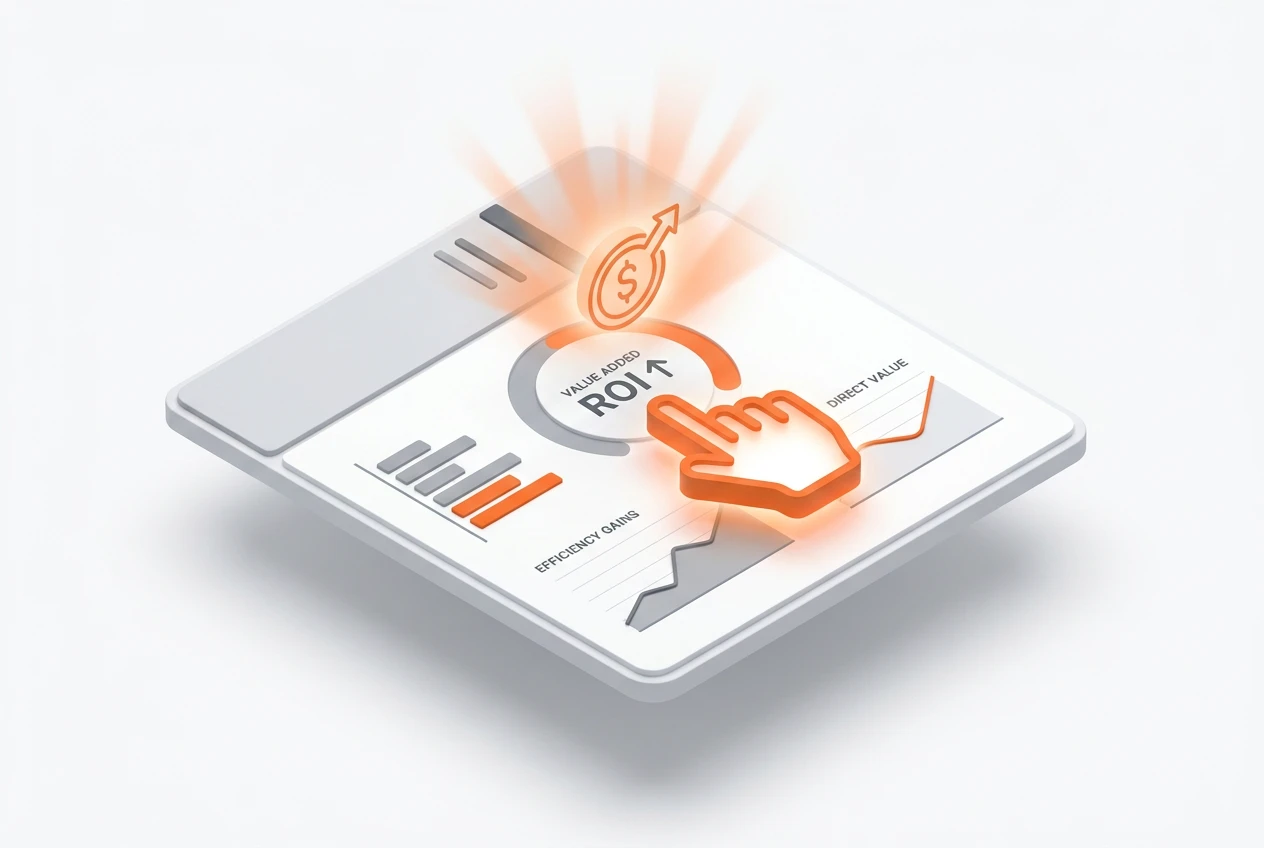
A customer self-service platform empowers clients to manage their own needs effectively. For example, they can view and pay invoices, track project progress, and access support documents 24/7. This convenience significantly improves their overall experience. Moreover, it reduces the administrative burden on your team. Fewer support calls and emails mean your staff can focus on high-value tasks. This dual benefit of higher client satisfaction and lower operational costs directly improves your client portal ROI.
Can a Portal Really Increase Client LTV?
Yes, a well-implemented portal is a key driver for increasing client LTV (Lifetime Value). When clients can easily manage their services and find answers, their satisfaction grows. Satisfied clients are notably more likely to stay with your business long-term. Furthermore, the portal provides a perfect channel for targeted communication about new offerings. By consistently delivering value and convenience, you build loyalty. This loyalty translates directly into a higher lifetime value for each customer.
What Customer Portal Features Drive Revenue?
Certain customer portal features are essential for turning it into a profit center. These features go beyond basic access and create active engagement. A truly effective portal, for instance, provides a central hub for all client interactions, which is a core principle of the BOOM ERP ecosystem. These elements work together to enhance the user experience and create new revenue channels.
- Personalized Dashboards: Displaying relevant service upgrade offers and personalized recommendations upon login.
- Integrated Billing: Allowing clients to easily view, pay, and upgrade service tiers from their invoice screen.
- Project Milestones: Showing progress and offering add-on services at key project stages.
- Resource Center: Providing access to premium content or paid training modules.
- Direct Communication: Using secure messaging to inform clients about exclusive offers.
- Feedback Forms: Gathering insights that lead to new, profitable service ideas.
How Does Data from a Portal Inform Strategy?
A client portal is a goldmine of first-party data. It shows you which services clients use most, what support articles they read, and when they are most active. This information is incredibly valuable for business strategy. For example, if many clients are viewing a specific service page, you can create a targeted upsell campaign. In contrast, low engagement on a feature might indicate a need for better training or a product update. This data-driven approach helps you make smarter decisions that increase client portal ROI.
What Is the Impact on Operational Efficiency?
Operational efficiency is a major component of profitability. A client portal automates many routine administrative tasks. For instance, clients can update their own contact information, download past invoices, and find answers in a knowledge base. Consequently, this frees up your team’s time. Instead of handling repetitive queries, your employees can focus on complex problem-solving and proactive client engagement. This reduction in overhead and reallocation of resources is a significant, though indirect, contributor to profit.
How Does White-Labeling Affect Client Portal ROI?
White-labeling your client portal is crucial for brand consistency and trust. When the portal looks and feels like your own brand, it reinforces your professional image. This seamless experience makes clients feel more secure and connected to your business. Consequently, they are more likely to engage with the portal’s features, including any upselling opportunities. Systems like BOOM ERP offer robust white-label capabilities, ensuring the portal becomes an integrated part of your brand ecosystem, thereby maximizing its potential for revenue generation.
Frequently Asked Questions
How can a client portal increase business revenue?
A client portal increases revenue by enabling direct upselling and cross-selling opportunities. It enhances client retention through superior self-service for billing, support, and project updates. This transforms the portal from an operational cost into a strategic asset that boosts customer lifetime value and drives profitable growth for your business.
What is client portal ROI?
Client portal ROI measures the financial return from your investment in a portal. It compares the revenue generated (e.g., from upsells, better retention) and costs saved (e.g., reduced admin work) against the cost of the software and its implementation. A positive ROI means the portal is a profit center.
How do I start turning a client portal into a profit center?
First, choose a platform with integrated commerce and communication features. Then, map out your customer journey and identify key points for upselling opportunities. Finally, promote the portal’s self-service benefits to drive adoption. Start simple and expand as you gather data.
Can a small business benefit from a client portal?
Absolutely. A client portal helps small businesses appear more professional and organized. It automates tasks, which is critical for small teams with limited resources. Moreover, it creates a scalable foundation for growth by improving client relationships and opening new revenue channels from day one.
What are the most important customer portal features?
The most important features for revenue generation include integrated payment processing, a personalized client dashboard, secure file sharing, project tracking, and a built-in messaging system. These features are all part of a unified platform like the one offered by BOOM ERP.
How does a unified system help with client portal revenue?
A unified system like BOOM ERP connects your portal to your CRM, billing, and project management. This end-to-end workflow means you can trigger upsell offers based on project milestones or client behavior automatically. This integration is key to turning a client portal into a profit center.
Shifting your perspective on the client portal is a strategic move toward sustainable growth. By leveraging it for upselling, enhancing retention, and improving efficiency, you unlock a powerful new revenue stream. A unified platform simplifies this process, providing all the tools you need in one place. Explore the full feature set of a modern ERP to see how you can transform your operations. For more updates, follow us on Facebook.